PIERRE LEROUX. Grabado del Siglo XIX

 PIERRE LEROUX 
19th century engraving


 PIERRE LEROUX  ( 1797 - 1874 )

Pierre Leroux fue un Político, filosofo y hombre de estado Francés, 

Pierre Leroux was a French politician and statesman

TITULO / TITLE : 

Pierre Leroux

GRABADOR / ENGRAVER  :

 Lavin Lavigne  ( 1797 - 1860 )

DATOS BIOGRÁFICOS / BIOGRAPHICAL DATA 

LAVIGNE LAVIN

OBRAS DEL MISMO GRABADOR / WORKS BY THE SAME ENGRAVER

COLECCIÓN DE GRABADO EN RETRATO PEÑA-GINÉS: LAVIGNE Lavin

MEDIDAS / MEASURES :

  12 x 13 cm

ESCUELA / SCHOOL :

 Escuela Francesa / French School

FECHA DE ESTAMPACIÓN / STAMPING DATA : 

1850ca, S / XIX

TÉCNICA / TECHNIQUE :

 Litografía / Lithography

OBRAS LITOGRAFICAS EN LA COLECCIÓN

LITHOGRAPHIC WORKS IN THE COLLECTION

COLECCIÓN DE GRABADO EN RETRATO PEÑA-GINÉS: Litografia

SERIES / SERIES : 

Grabado del Siglo XIX / 19th century engraving

COLECCIÓN DE GRABADO EN RETRATO PEÑA-GINÉS: Grabado Siglo XIX

  Retrato en grabado del Siglo XIX / 19th century engraving

COLECCIÓN DE GRABADO EN RETRATO PEÑA-GINÉS: Retratos en Grabado Siglo XIX

   Retratos de Francia / French portrait

COLECCIÓN DE GRABADO EN RETRATO PEÑA-GINÉS: Retratos Francia

OBSERVACIONES / OBSERVATIONS : 

Litografía aparecida en la colección de 900 litografías...

 " Assemblée Nationale , Galerie Representants du Peolpe, 1848, Paris Maison Basset , rue de Seine 33, Pans_Goupil , Vibert &  B. Mormatre". número de litografía 154 "

REFERENCIAS / REFERENCES :

* Biblioteca Nacional de Francia, Collection Vinck nº ark:/12148/btv1b53015328s.


Litografía del Siglo XIX

IDYLLE DE THÉOCRITE. Grabado del Siglo XVIII

IDYLLE DE THEOCRIT
18th century engraving


IDYLLE DE THÉOCRITE

TITULO / TITLE :
 Idylle de Théocrite

AUTOR / AUTHOR : 
Charles Monet  ( 1732 - 1808 )

DATOS BIOGRÁFICOS / BIOGRAPHICAL DATA :
 
GRABADOR / ENGRAVING :
 Charles François Letellier  ( 1743 -1800 )

DATOS BIOGRÁFICOS / BIOGRAPHICAL DATA :

OBRAS DEL MISMO GRABADOR / WORKS BY THE SAME ENGRAVED

MEDIDAS / MEASURES :
 12 x 19cm

ESCUELA / SCHOOL :
Escuela Francesa / French School

FECHA DE ESTAMPACIÓN / STAMPING DATA : 
1797, S / XVIII

TÉCNICA / TECHNIQUE :
 Grabado a buril / Burin engraving

SERIES / SERIES:
 Grrabado del Siglo XVIII / 17th century engraving :
Mitología Clásica / Classic Mythology

CATÁLOGO / CATALOGUE :
 Carpeta del Siglo XVIII, C 2 / 18th century folder, C 2

OBSERVACIONES / OBSERVATIONS :
Pominente de la publicación / Prominent work of the publication:

  " Ouvres de Gessner, Paris en 1797 "

Carpeta del Siglo XVIII

FENELON. Grabado del Siglo XIX


 FRANCOIS FENELON   (  1651 - 1715 )

Francois Fenelon fue un prelado, teológo y poeta Francés, Arzobispo de Cambrai y miembro de la Academia Francesa de las letras, consejero espiritual de Madame de Maintenon y preceptor del Duque de Borgoña, fue un crítico de la monarquía absoluta de Luis XVI.

Francois Fenelon was a French prelate, theologian and poet, Archbishop of Cambrai and member of the French Academy of Letters, spiritual advisor of Madame de Maintenon and preceptor of the Duke of Burgundy, he was a critic of the absolute monarchy of Louis XVI.

TITULO / TUTLE : 

 Fenelon

AUTOR / AUTHOR  : 

 Joseph Vivien ( 1657 - 1735 )

GRABADOR /ENGRAVER : 

 Alexander Massard  ( 1777 - 18 ? )

DATOS BIOGRÁFICOS / BIOGRAPHICAL DATA 

MASSARD, ALEXANDER

OBRAS DEL MISMO GRABADOR / DATOS BIOFRAFICOS 

COLECCIÓN DE GRABADO EN RETRATO PEÑA-GINÉS: MASSARD Alexander

MEDIDAS / MEASURES :

 13 x 23 cm

ESCUELA / SCHOOL: 

Escuela Francesa / French School

FECHA DE ESTAMPACIÓN / STAMPING DATE 

 1823ca, S / XIX

SERIES / SERIES : 

Grabado del Siglo XIX / 19th century engraving

COLECCIÓN DE GRABADO EN RETRATO PEÑA-GINÉS: Grabado Siglo XIX

  Retrato en grabado del Siglo XIX / 19th century engraving

COLECCIÓN DE GRABADO EN RETRATO PEÑA-GINÉS: Retratos en Grabado Siglo XIX

   Retratos de Francia / French portrait

COLECCIÓN DE GRABADO EN RETRATO PEÑA-GINÉS: Retratos Francia

CATÁLOGO / CATALOGUE : 

Carpeta del Siglo XIX, C1 a - Subcarpeta 2   ( 1801 - 1850 )

19th century foder, C 1 a - subfolder 2  ( 1801 - 1850 )

Grabado del Siglo XIX

ESCENA CABALLERESCA II. Grabado del Siglo XVI

ESCENA CABALLERESCA  II
16th century engraving
 

ESCENA CABALLERESCA II

Esta imagen muestra un grabado en xilografía (grabado en madera) de factura clásica, característico de las ilustraciones de libros impresos de finales del siglo XV o de la primera mitad del siglo XVI (incunables o post-incunables).

El estilo de líneas gruesas, cortes directos y sombreados paralelos simplificados es muy típico de las imprentas de la época que ilustraban crónicas históricas, romances de caballería o relatos bíblicos.

This image shows a woodcut (engraving) in the classic style, characteristic of illustrations for printed books from the late 15th or early 16th century (incunabula or post-incunabula). The style, with its thick lines, direct cuts, and simplified parallel shading, is very typical of the printing presses of the period that illustrated historical chronicles, chivalric romances, or biblical narratives.

ICONOGRAFÍA / ICONOGRAPHY :

El grabado representa una vívida escena de campaña militar o asedio. Se distinguen claramente tres planos principales:

El campamento militar (Primer plano, izquierda): Se aprecian detalladamente tres tiendas de campaña o pabellones militares de forma cónica, rematadas con pomos o esferas en el vértice y decoradas con bandas verticales.

La caída de la ciudad/fortaleza (Fondo, izquierda): Una fortaleza o muralla urbana está bajo ataque o ha sido conquistada. Grandes columnas de humo denso y llamas estilizadas emergen de los edificios, un recurso visual muy común en la época para denotar la destrucción o el saqueo de una plaza fuerte.

La caballería y el combate (Flanco derecho): Un grupo de soldados armados y caballeros con armadura avanza hacia la escena. Destaca un jinete en primer plano cuyo caballo se orienta hacia la quema. En la parte inferior derecha, se observa a un guerrero caído en el suelo (o un prisionero sometido), lo que refuerza el dramatismo de la victoria o el asalto.


The engraving depicts a vivid scene of a military campaign or siege. Three main planes are clearly distinguishable:
The military encampment (Foreground, left): Three conical tents or military pavilions are shown in detail, topped with knobs or spheres at the apex and decorated with vertical bands.
The fall of the city/fortress (Background, left): A fortress or city wall is under attack or has been conquered. Large columns of dense smoke and stylized flames emerge from the buildings, a common visual device at the time to denote the destruction or sacking of a stronghold.
The cavalry and combat (Right flank): A group of armed soldiers and armored knights advances toward the scene. A rider stands out in the foreground, his horse facing the flames. In the lower right, a fallen warrior (or a subdued prisoner) is visible, reinforcing the drama of the victory or assault.

MEDIDAS / MEASURES : 

10 x 7 cm

FECHA DE ESTAMPACIÓN / STAMPING DATA :

 1550 a 1590ca, S / XVI

TÉCNICA / TECHNIQUE : 

Xilografía / Xylography

OBSERVACIONES / OBSERVATION:

Por su formato casi cuadrangular y el tipo de orla sencilla que lo delimita, este taco de madera probablemente se talló para ilustrar el capítulo de un libro impreso. En esa época (siglos XV-XVI), era sumamente habitual que los impresores reutilizaran el mismo grabado en diferentes partes del libro —e incluso en obras totalmente distintas— para representar cualquier batalla, asedio o destrucción de una ciudad, sin importar el rigor histórico exacto del pasaje.

Given its almost square shape and the simple border that defines it, this wooden block was probably carved to illustrate a chapter in a printed book. At that time (15th-16th centuries), it was extremely common for printers to reuse the same engraving in different parts of a book—and even in entirely different works—to depict any battle, siege, or destruction of a city, regardless of the exact historical accuracy of the passage.

OBRAS XILOGRÄFICA EN LA COLECCIÓN PEÑA - GINÉS

XYLOGRAPHIC WORKS IN COLLECTION PEÑA - GINÉS

COLECCIÓN DE GRABADO EN RETRATO PEÑA-GINÉS: Grabado Xilografico

SERIES / SERIES :

 Grabado del Siglo XVI / 16th century engraving

COLECCIÓN DE GRABADO EN RETRATO PEÑA-GINÉS: Grabado siglo XVI

CATÁLOGO / CATALOGUE : 

Carpeta del Siglo XVI / 16th century folder

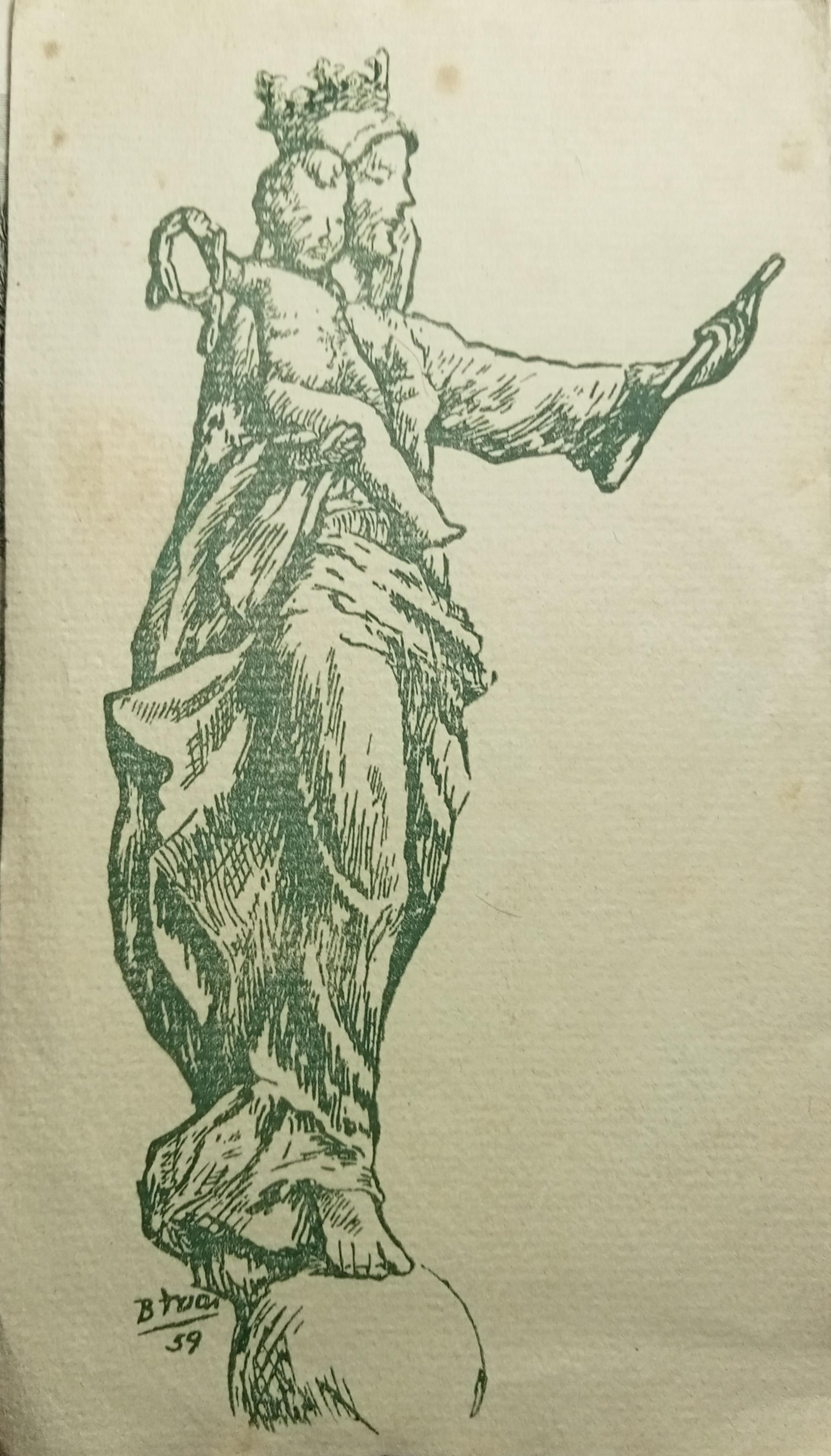
MARE DE DÉU DE LA MERCÈ. Grabado del Siglo XX


 MARE DE DÉU DE LA MERCÉ


Mare de Déu de la Mercè es una advocación Mariana de la ciudad de Barcelona ligada a la fundación de la Orden de la Merced, cuenta la leyenda que la Virgen de la Merced se aparecio a San Pere Nolasc , Sant Ramon de Penyafort i al rey Jaume I el Conqueridor, para la redención de cautivos en manos de musulmanes, durante la edad media la orden y la advocación se expandió por el Mediterráneo, parte de Europa  posteriormente por tierras americanas convirtiendo a la virgen de la Merced en una popular advocación, su festividad se celebra el 24 de Septiembre.

Mare de Déu de la Mercè is a Marian devotion of the city of Barcelona linked to the founding of the Order of Mercy, legend has it that the Virgin of Mercy appeared to San Pere Nolasc, Sant Ramon de Penyafort and King James I the Conqueror, for the redemption of captives in the hands of Muslims, during the Middle Ages the order and the invocation spread throughout the Mediterranean, part of Europe and later to the Americas, making the Virgin of Mercy a popular invocation, her feast day is celebrated on September 24.

TITULO / TITLE :

 Mare de Déu de la Mercè

GRABADOR / ENGRAVER :

 Ilegible

MEDIDAS / MEASURES : 

16 x 9 cm

ESCUELA / SCHOOL: 

Escuela Española / Spanish School

FECHA DE ESTAMPACIÓN / STAMPING DATE : 

1959,  S / XX

SERIES / SERIES :

 Grabado del Siglo XX / 20th century engraving

COLECCIÓN DE GRABADO EN RETRATO PEÑA-GINÉS: Grabado Siglo XX

Escena Biblica / Biblical Scene

COLECCIÓN DE GRABADO EN RETRATO PEÑA-GINÉS: Escena Bíblica

OBSERVACIONES / OBSERVATIONS : 

Estampa religiosa / Religious Stamp

CATÁLOGO / CATALOGUE :

 Carpeta del Siglo XX - subcarpeta 1

20th century folder - subfolder 1