Mostrando entradas con la etiqueta Marca Tipografica. Mostrar todas las entradas

CENTAURO. Marca tipográfica del Siglo XVIII


CENTAURO

El centauro es un personaje mitologico griego con la cabeza, el torso y los brazos de un hombre y las patas de un caballo se creia vivia en las montañas del Pelión cerca de Tesalia.

The centaur is a Greek mythological character with the head, torso and arms of a man and the legs of a horse. He was believed to live in the Pelion Mountains near Thessaly.

TITULO / TITLE :
Centauro

EDITOR / PUBLISHED :

GRABADOR / ENGRAVER:
Mathias Kerner ( 17- 17? )

MEDIDAS / MEASURES:
6 x 8 cm

MATERIAL / MATERIAL: 

FECHA DE ESTAMPACIÓN / STAMPING DATA:
Ratisbone, 1726  S / XVIII

ESCUELA / SCHOOL:
Escuela Francesa / French School

SUJETO;
Marca tipográfica

SERIES :
Grabado del Siglo XVIII / 18th century engraving

Colección de Marcas Tipográficas

CATÁLOGO / CATALOGUE:
Carpeta del Siglo XVIII C2A - Subcarpeta 10
 

COLECCIÓN DE MARCAS TIPOGRÁFICAS PEÑA - GINÉS

Facsimil prominente de la publicación Panaromitatus de Tudeschis Venise, Johannes de Colonia et Johannes Manthen 1478

  Laa marcas  tipográficas  son un emblema, forma, distintivo o signo utilizado por un impresor, librero u editor para identificar su trabajo, estas marcas suelen aparecer en un colofón o en la parte inferior de la portada de los libros, estas podlian ser alegórias muy elaboradas o un simple signo o inicial del impresor.

En el enlace   Colección de libros y marcas tipográficas Peña- Ginés: Marca tipográfica  se pueden observar con mas detalles la colección de marcas tipográficas del que se nutre la colección que  van desde mediados del Siglo XVI hasta el siglo XIX.


A
B
C
D
E
F
G
H
I
J
K

* Klener Mathias 


* Knapen  Andrea François (1749 - 1804 )  ( Tipografía )
L
* José Lamarca  ( 1756 - 1786 )  ( tipografía )
M

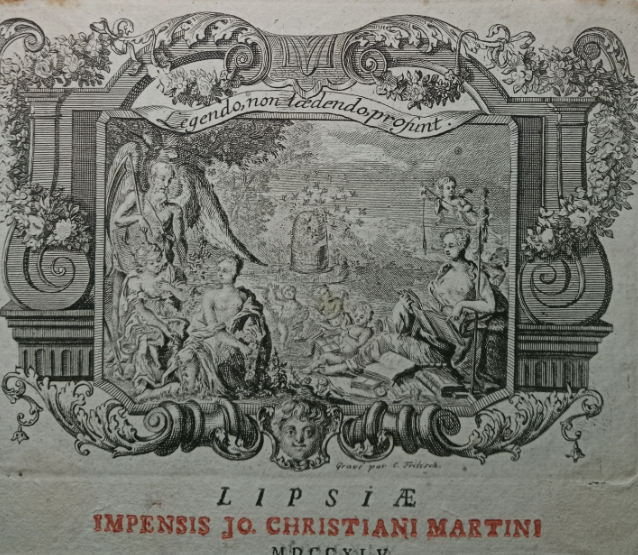
* Martini, Christiani  ( S / XVIII )  ( Tipografía )
N
O
P
Q
R
S
T
U
V
W

* Wechel Andreas  ( 1510 - 1581 )   ( Tipografía )


* Westeim Amsterdam  ( Tipografía )


FONDERE VIRTUS HILARIS, LIGNUM VIRTUTIS. 16th century engraving

FONDERE VIRTUS HILARIS, LIGNUM VIRTUTIS
Grabado del Siglo XVI
 

FONDERE VIRTUS HILARIS,LIGNUM VIRTUTIS


 InterpretaciÓn 

La interpretación nos muestra una mano con un dedo señalando en dirección al árbol de la virtud y en ella las palabras Landris Virtutis ,podría ser una alusión al librero, editor  y grabador Petrus Landry ( 15 ? - 1615 ? ) alrededor encontramos el lema Fondere Virtus Hilarium flanqueado por dos efigies que podrían representar los dos valores militar y civil coronado todo ello por un escudo con un trébol, una medialuna y dos estrellas en los lados.

El árbol representa las siete virtudes, prudencia, justicia, templanza, coraje, fe, esperanza y caridad, esta marca tipográfica es empleada de forma recurrente durante el renacimiento y parte del siglo XVII por los libreros y editores del centro de Europa en contraposición al lema Dissimulum Infida Societas que usaron algunos libreros y editores de  la Italia del cinquecento y décadas posteriores.

El árbol de la virtud en su parte inferior suele acabar su forma final con el signo de la cruz dentro de una esfera, corazón o incluso un ancla.
______________

Interpretation :

The interpretation shows a hand with a finger pointing in the direction of the tree of virtue and on it the words Landris Virtutis, could be an allusion to the bookseller, publisher and engraver Pierre Landry ( 1630? - 1701) around it we find the motto Fondere Virtus Hilarium flanked by two effigies that could represent the military and civilian values crowned by a shield with a clover, a crescent and two stars on the sides.

The tree of virtue represents the seven virtues, prudence, justice, temperance, courage, faith, hope and charity, this typographic mark is recurrently used during the Renaissance and part of the seventeenth century by booksellers and publishers of central Europe as opposed to the motto Dissimulum Infida Societas used by some booksellers and publishers of the Italy of the Cinquecento and later decades.

The tree of virtue in its lower part usually ends its final form with the sign of the cross inside a sphere, heart or even an anchor.

_______________

TITULO / TITLE:
Fondere Virtus, Lignum Virtutis

GRABADOR / ENGRAVER :
Petrum Landry ( 15 ? - 1615 ? )

DATOS BIOGRAFICOS / BIOGRAPHICAL DATA :

MEDIDAS / MEASURES :
11 x 21cm

ESCUELA / SCHOOL :
Escuela Francesa / French School

FECHA DE ESTAMPACIÓN / STAMPING DATA :
1586, S / XVI

PERIODO / PERIOD :
Manierismo  / Mannerism

MATERIAL / MATERIAL :

OBSERVACIONES / OBSERVATIONS :

Prominente de la publicación :
Prominent of engraving :


SERIES / SERIES :
Grabado del Siglo XVI / 16th century engraving


Portadas / Cover pages

Marca Tipografíca / Typographic Mark


CATÁLOGO / CATALOGUE :
Carpeta del Siglo XVI, C 1 Port - Subcarpeta 3
16th century folder, C 1 - Subfolder 3