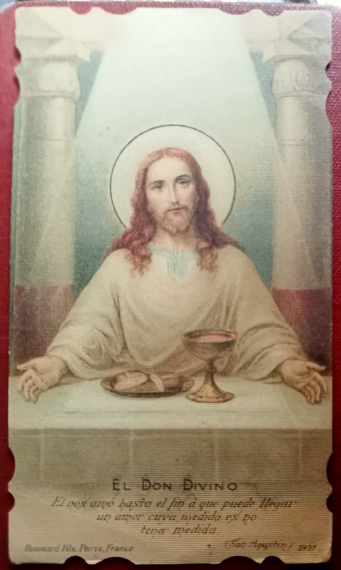
La CROMOLITOGRAFÍA / THE CHROMOLITHOGRAPHY
La Cromolitografia es un método donde sus ilustraciones están realizadas en color, al contrario de la litografia que estas son en blanco y negro, técnica inventada por el impresor y litografo francés de origen alemán Godefroy Engelmann ( 1778 - 1839 ) en la década de 1830, no fue hasta finales del Siglo XIX y durante las primeras decadas del siglo XX coincidiendo con el Art Noveau y el Modernismo que el uso de la cromolitografía se generalizó, se imprimieron elaborados carteles publicitarios, tarjetas de visita, retratos, estampas devocionales o Vitolas de Puros con relieves en pan de oro e intentando imitar al máximo la pintura, la cromolitografía tuvo una vida efímera a partir de 1940 con la llegada de la fotografía en color, su uso desapareció casi por completo.
Cromolithography is a method where the illustrations are in colour, unlike lithography, which is in black and white, a technique invented by the German-born French printer and lithographer Godefroy Engelmann (1778-1839) in the 1830s. It was not until the end of the 19th century and during the first decades of the 20th century, coinciding with Art Nouveau and Modernism, that the use of chromolithography became widespread, Elaborate advertising posters, business cards, portraits, devotional prints or cigar bands were printed with gold leaf reliefs and trying to imitate painting. Chromolithography had an ephemeral life after 1940 with the arrival of colour photography, its use disappeared completely.
LA LITOGRAFÍA Y SU EVOLUCIÓN HASTA LA CROMOLITOGRAFÍA
 |
Estampa Devocional
1910 a 1925, S / XX |
La técnica litográfica apareció por azar en 1798 de la mano del dramaturgo, músico y actor Alois Sanefelder ( 1771 - 1834 ) que indagaba encontrar un método económico y eficaz para imprimir sus partituras, la leyenda cuenta que realizó un dibujo en incisión sobre una piedra plana calcárea mojada con agua y cubierta estas hendiduras con una composición de jabón, grasa y negro de hollín, luego de untar la piedra y limpiarla con agua el material obtenido al ser hidrófilo quedo fijado en las incisiónes pudiendose realizar diferentes copias de la misma matriz, este método se usó desde mediados del siglo XIX en retratos, partituras y publicaciones varias hasta mediados del siglo XX.
El litógrafo y editor Francés Godefroy Engelmann en la década de 1830 perfecciono la litografía aplicando con diferentes piedras calcáreas el color en las estampas, esta nueva manera de hacer recibió el nombre de cromolitografía, termino derivado del Griego "Chroma" color "lithos " piedra, y "graphia" dibujar.
LITHOGRAPHY AND ITS EVOLUTION TO CHROMOLITHOGRAPHY
 |
Estampa Devocional
de 1900 a 1910, S / XX |
The lithographic technique appeared by chance in 1798 by the playwright Alois Sanefelder (1771 - 1834). According to legend, he made an incision drawing on a flat limestone wet with water and covered these cracks with a composition of soap, grease and soot black, after smearing the stone and cleaning it with water, the material obtained, being hydrophilic, remained fixed in the incisions and different copies of the same matrix could be made, This method was used since the early nineteenth century in portraits, scores and various publications until the mid-nineteenth century when . |
| Vitola Cromolitográfica, 1950ca, S / XX |
The French lithographer and publisher Godefroy Engelmann in the 1830s perfected lithography by applying with different calcareous stones the color in the prints, this new way of doing received the name of chromolithography, a term derived from the Greek “Chroma” color “lithos ” stone, and "graphia ” draw.
 |
Recuerdo de comunión
1921, S / XX |
La Cromolitografía alcanzó su máximo impulso junto al Art Noveau o el modernismo, desapareciendo casi por completo con la aparición de la fotografía en color durante la década de 1940 y manteniéndose durante la segunda parte del siglo XX en la denominada Vitofília, así como en alguna que otra cromolitografía conmemorativa. La Colección de grabado en retrato Peña - Ginés dispone en sus fondos de una pequeña muestra de Cromolitografia y Vitolas litograficas. COLECCIÓN DE ESTAMPAS DE DEVOCIÓN Y RECORDATORIOS PEÑA-GINÉS: Cromolitografia
Chromolithography reached its maximum impulse with Art Noveau or modernism, disappearing almost completely with the appearance of color photography during the 1940's and remaining during the second part of the 20th century in the so-called Vitofília, as well as in some other commemorative chromolithography.
The Peña-Ginés Portrait Engraving Collection has in its collection a small sample of chromolithographs and lithographic vellum.